From an online course to a week in Brno
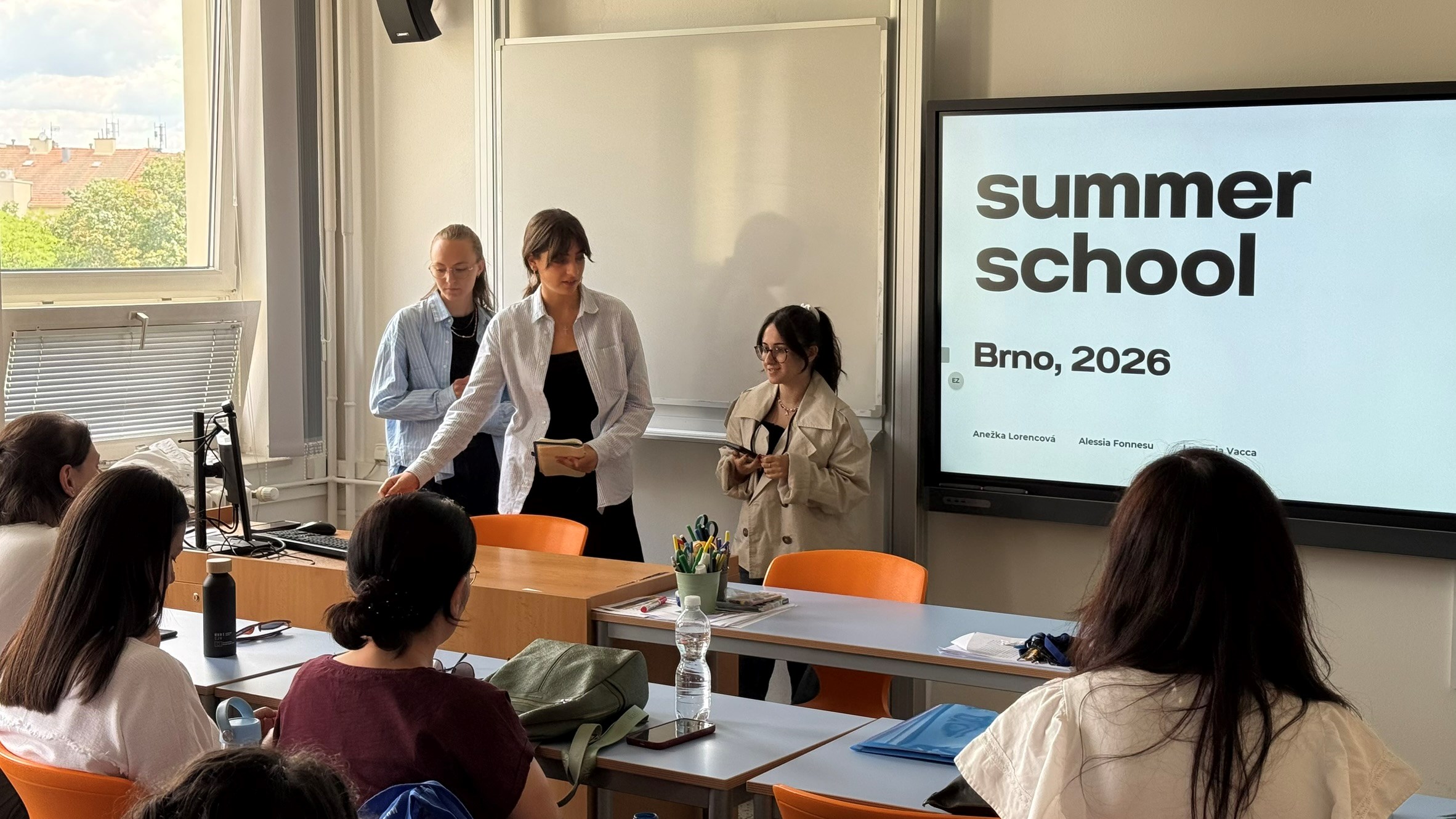
Play with Languages is an Erasmus Blended Intensive Programme (BIP) that we run together with partner universities across Europe. The 2026 edition unfolded in two phases: it opened with a thirteen-week online course from late February to mid-May, and culminated in an intensive summer school in Brno from 20 to 24 July. Together, the two parts were worth five ECTS credits.
Who took part
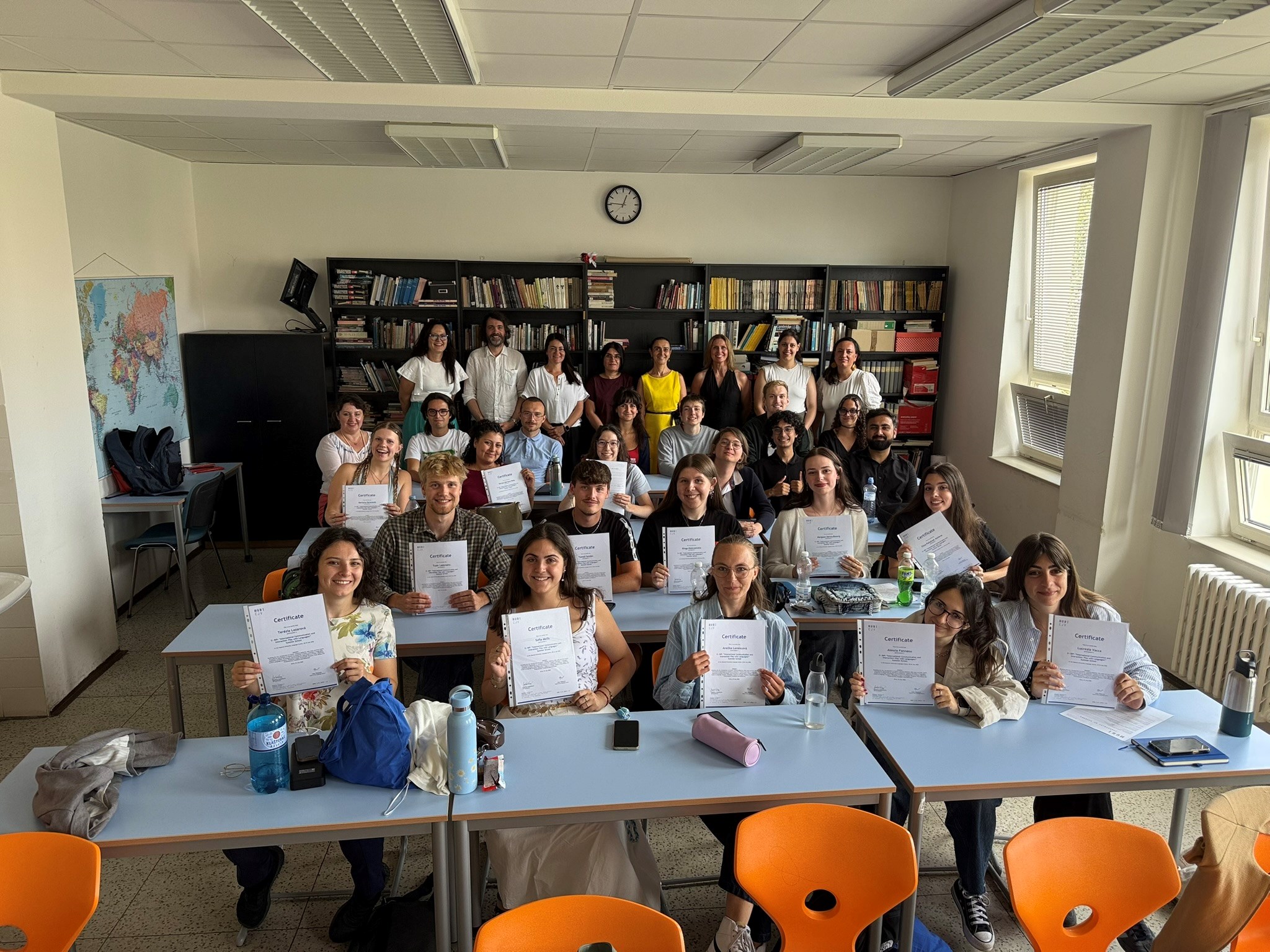
The online phase brought together 25 students, along with two academics from Hacettepe University in Ankara. For the summer school in Brno, 23 participants met in person: 15 students from partner universities abroad and 8 from Masaryk University.
They came from five countries. From Université libre de Bruxelles (Belgium) we welcomed six students, from Università degli Studi di Cagliari (Italy) five, from Hacettepe University (Turkey) three, and from CY Cergy Paris Université (France) one, joining our eight students from MU. Colleagues from OTH Regensburg (Germany) took part in the online phase but could not travel for the summer school because of exams.
What the week was about
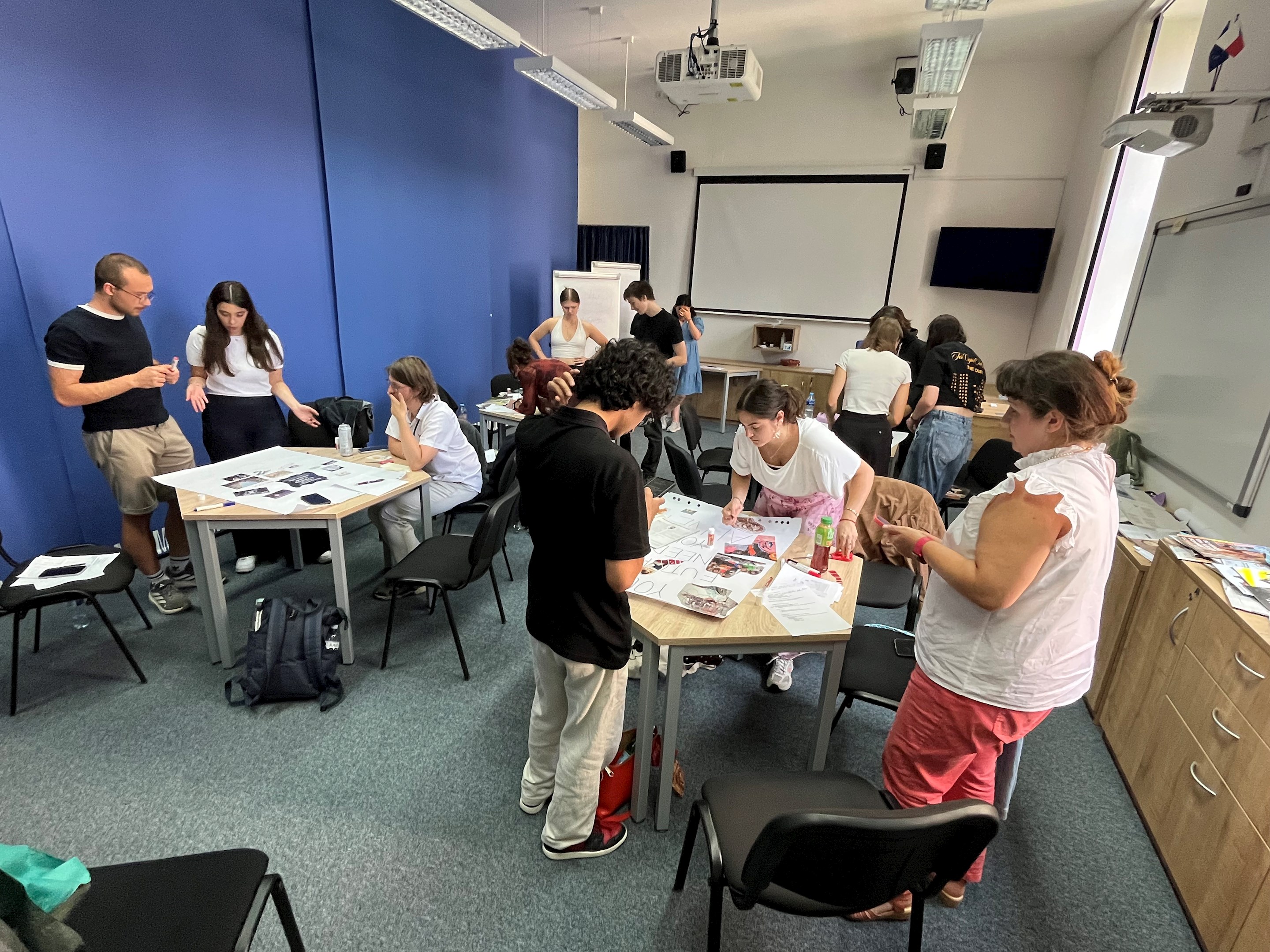
The programme is built around plurilingual competence and intercomprehension — the ability to draw on the languages you already know to make sense of ones you have never formally studied. Over the week, participants worked across six target languages: French, Italian, Spanish, Portuguese, Czech, and German. They practised using their whole linguistic repertoire, communicating with partial competence in several languages at once, and leaning on gestures and other paralinguistic cues when words ran out.
The workshops ranged from Explore Your Plurilingual Self and Metalinguistic Awareness to Plurilingual and Pluricultural Mediation, Migrating Words and Language Contacts, and a practical Survival Czech. Beyond the classroom, participants got to know the city through a treasure hunt, a "Czech in the City" outing, a movie session, and a picnic.
A meeting with Greenlandic authors
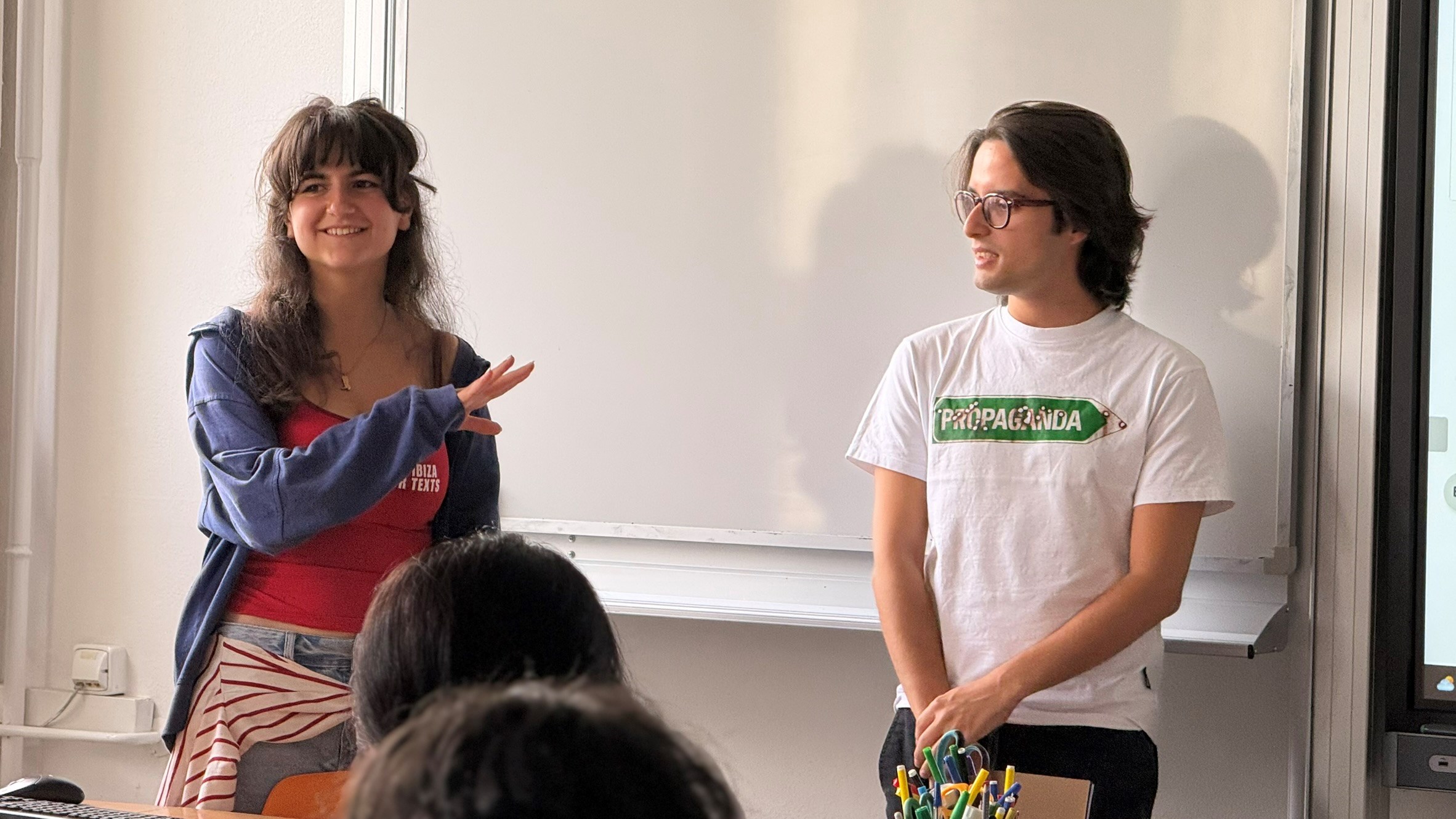
One of the week's highlights came from Brno's cultural calendar. This year's Month of Authors' Reading (Měsíc autorského čtení) — a major Brno literary festival — welcomed Greenland as its guest of honour, and thanks to CJV's collaboration with the festival, our participants got a session of their own. On Thursday 23 July, the summer school met contemporary Greenlandic authors Minik Hansen and Karl Jens Olsen, whose writing draws on Inuit culture and a rich tradition of oral storytelling.
The students' interest was clear throughout: they asked the authors about their creative process and about questions of cultural identity. In their closing reflections, many singled out the encounter as a rare chance to hear an authentic, first-hand perspective on the language, life, and cultural identity of Greenland today.
The team
Kateřina Sedláčková coordinated the programme and taught alongside our lecturers Athena Alchazidu, Radim Herout, Barbara Staffolani, Martina Terrabuio Čermáková, and Jitka Žváčková. For the teaching team, the group itself was a highlight: our lecturers described the students as capable, original, and genuinely curious, and pointed to the constant networking, in class and out of it, as one of the week's defining features.
What participants took away
All 23 participants who completed the summer school earned their certificate and five ECTS credits. For many, the real takeaway was a shift in mindset as much as a set of skills. As one participant put it, "knowing one language of a language group is a superpower for understanding multiple others."
The feedback returned again and again to the same discovery: that you can follow a conversation, and even join in, without sharing a first language. Others valued the atmosphere as much as the learning — "It was such a great and pleasant surprise that there was so much communication between the participants and the professors," wrote one student, comparing the week favourably to more lecture-heavy programmes elsewhere.
Among the moments participants singled out were the daily reshuffling of groups, which kept everyone working with new people, and the informal time outside class — the shared afternoons, the ice-breaker on the first day, and a picnic in the park.
Programme coordinator Kateřina Sedláčková especially valued the students' openness — to the world, to new experiences, and to the connections between cultures — along with their enthusiasm for learning many languages at once.
Part of a bigger plurilingual story
Play with Languages is one strand of our Plurilingual and Pluricultural Initiatives at CJV, through which we treat plurilingualism as a genuine superpower. The same initiative brings together the international FlexiLingua Group, our Colloque Brno conference series on plurilingualism, and the open-access e-book Thinking, Practicing and Living Plurilingualism, published by Masaryk University Press.
Play with Languages 2026 thus confirmed the role of CJV as a platform that connects languages, cultures, and students from across Europe — and showed how much understanding is possible when people are willing to meet each other halfway, in whatever languages they share. The programme runs again next year, with applications for the next edition opening in the autumn.